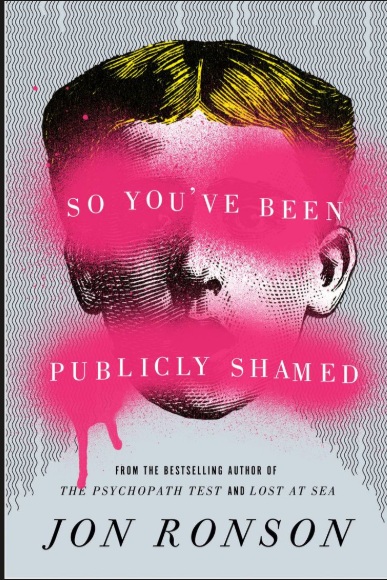
This book confused me at first: I expected it to address the pernicious aspects of current internet-era shaming (and it does, eventually), but the first chapter is about the author’s experience of identity theft, in which internet shaming actually helped him. For reasons that remain unclear, three academics created a bot with his name that evinced all kinds of crazy opinions online, most related to food choices. When he contacted them, they were unrepentant: “You don’t own the name”, was their response. So he invited them to a meeting which he recorded and put online, showing them to be the bumbling idiots they were. They quickly scurried back under the rock from which they came.
So, shaming works, and is good, right?
In that case maybe, but Ronson goes on to cover a number of cases where internet shaming destroyed lives, some where the shames were unaffected and got off scot-free, some where the victims were ultimately redeemed, and one where the attacker was shamed herself and ultimately destroyed her own life. Along the way, we meet a fellow in LA who promises to inure people to malicious tweets, chiefly by having them yell at each other, charging $600 for the privilege. It was entertaining, but seemed to be a collection of vignettes without a common theme. I was expecting a “unified theory of shaming” but never got one. Except, perhaps, if you are going to be internet shamed, it seems much better to be a man. A fellow who lost his job because he was overheard making juvenile jokes about “dongles” quickly got another one, but the woman who attacked him was subsequently shamed herself, lost her job, and (as of the book’s writing) had not found another. The woman who played a childish prank at a veteran’s cemetery became public enemy #1 for vets, up there with Jane Fonda. She was ultimately redeemed by a company, documented in the book, that “unshames” you by putting out so much anodyne pap that the nasty stuff is relegated to page 2 of Google lookups. The (in)famous case of the woman who made an unfortunate tweet about Aids in Africa was covered; her life took a long time to return to normal. Whereas the Head of Formula 1 racing is filmed participating in a German military-themed sex orgy and no one cares. Ditto for a Pastor who has a tryst with a hooker and is subsequently revealed to the community.
It is a fun, fast read about the modern era and has some good background history about public shaming—apparently it was a viable punishment up to the 1800s—and also has a good teleological discussion of shaming in modern criminal correction. So I was entertained and learned something. 4/5 stars.