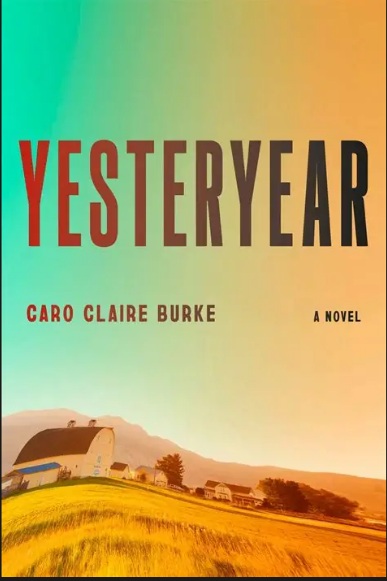
To say this book is polarizing is like saying the US is having a tad bit of trouble getting tankers through the Strait of Hormuz right now—it currently holds a 3.86 rating on Goodreads, which is relatively low for a bestselling book and reflects the fact that some 30% of readers rated it 3 or below. Why the U-shaped ratings?
I think it is because it spares neither side in the ongoing mommy-feminist culture wars. A synopsis (again, spoilers):
Natalie and her sister are raised by a single mother, a devout Christian living in an unspecified rural town in Idaho. She is very smart and earns a full scholarship to Harvard but is immediately taken aback by the licentiousness and amorality of her fellow (female) students–all self-proclaimed feminists waging war against the “patriarchy”. In addition to having no moral code, they are portrayed as liars and hypocrites, enjoying the benefits of an upper-middle-class upbringing while simultaneously railing against their parents. One of them has consensual sex with a boy and later claims she was raped. Natalie reacts to her classmates by courting, and then marrying, a fantastically wealthy senior, the scion of a powerful political family and also, according to Natalie, as dumb as post. She quickly becomes pregnant and drops out of Harvard and settles into what might be domestic bliss, except that she hates being a mother, despises the child, and considers her husband a poor lover and stupid man with no ambition, to boot. (He is actually very good with children and aspires to be a kindergarten teacher, which Natalie agrees he would be good at but quickly dissuades his ambitions because it is not “manly.”)
Brainstorming with her sinfully rich father-in-law, she hatches a plan: Overpay for an abandoned 500-acre ranch in Idaho and establish an online influencer career of selling an ersatz “frontier-tradwife-life” to millions of gullible Instagramers, which is to real farming as the Matterhorn in Disneyland is to mountaineering. Wait, what? The suspension of disbelief is almost broken here—I can buy (maybe) that she would throw away a hard-fought Harvard scholarship (it’s not Stanford, after all), but spend five million dollars to finance a fake internet scheme? Why can’t her husband teach kids? It worked for Mr. Rogers.
Let’s shove that doubt aside and continue: the scheme goes well for about a dozen years, until the crisis occurs: At this point she presides over a brood of five kids, sixth one in the oven, with two dozen laborers working the fields which are supposed to be organic but are actually the product of liberal applications of (hidden) pesticide and a dolt of a husband whose main role seems to be eye-candy for the tradwife videos she sells. She is aided by two nannies and a video producer, whose carefully edited videos make it appear that she and her husband are raising the kids and working the farm themselves.
Things come to a head when the husband sleeps with the producer. Natalie attacks her, forcing the producer to go on TV and spill the beans, while also levying assault charges.
Natalie responds as we all would. (If we were insane.) She gives up her kids to her mother and retreats to the ranch, determined to actually live the life she was faking and eschewing all conveniences invented after 1855 and many that were invented before then as well—a life roughly on a level between the slums of Mexico and Gaza, or maybe Darfur.
During this interlude, which lasts 15 years, she gives birth to three more children, for a family of six living as war refugees—the daughter (Mary) who was in her womb when the scandal broke and three more children.
The story ends when the authorities finally intervene, take the kids away, and throw Natalie in prison for child endangerment.
That’s the linear timeline, and it would be a very boring story if it were told that way. The book’s appeal is the framing device: It begins with 30 pages or so describing her life as queen of the (fake) range, which establishes the scope and magnitude of her deception, but then she wakes up in 1855 in a house similar to hers but stripped of all modern conveniences, four children she doesn’t recognize, and a husband who vaguely resembles hers but treats her like chattel. The rest of the story is told as she tries to understand how she had been transported back in time, or perhaps abducted into a reality TV show. It is juxtaposed with flashbacks that tell how she got to this point (Harvard, idiot husband, unwanted kids, fake internet show, scandal).
That is what kept me turning pages and why I think so many people enjoyed this book. The reader wants to discover the secret: Did she travel in time? Was she abducted? Perhaps crazy?
There are many plot holes, and the book could have benefited from better editing for continuity. The reader is asked to believe Natalie chose a life of penury voluntarily and has raised four kids frontier style, but at some point lost her memory and believes she was abducted, or else the whole thing doesn’t work. Timelines don’t really match up: her youngest was born with the cord wrapped around her neck, which was removed by 8-year-old Mary, except Mary is 15 at book’s end and the youngest is 10, so Mary was only five.
The house is single story except when it isn’t: sometimes it has stairs. The ranch is out in the boonies up a long dirt road between two Indian reservations, except it is also 15-20 minutes from her mother’s house.
Those niggles aside, the theme is straightforward and rather banal: Make stupid choices and end up in jail, or insane, or maybe both. It reminded me of Flaubert’s Madame Bovary, where the protagonist is the engine of her own destruction. The more interesting question is: why does she make such poor choices? I think this is why the book is so controversial, as neither the “angry woman feminist” camp nor the “trad wife” side like the answer.
She gives up a sweet ride to Harvard because she is affronted by the vapidity of her classmates and doesn’t like the life that track leads to–struggling to make it in a man’s world and giving up the joys of motherhood and family life. Her foil for this is Reena, her roommate whose character and career she predicts and dissects: Reena will struggle hard for mediocre gains, giving up a lot, and will be expected to be thankful for it. Natalie rejects her husband’s ambitions and dreams up an insane, fever dream of a fake ranch in the belief that she can avoid both the “angry woman feminist” role and the “tradwife” alternative by cosplaying a parody of the “tradwife” life, bankrolled by idiot Internet viewers.
This ends badly, and I think that is what makes readers so angry. What? Wasn’t I promised that I can “have it all?”
No. Nobody can have it all. You were lied to. Life involves compromise, which is something Natalie never learns. Reena, the feminist archetype, doesn’t seem to have done so badly. She appears at the end of the book as some kind of Diane Sawyer analogue, interviewing Natalie. She gave up things to get there, as she relates to Natalie—she has a family, just not a “traditional family” (the reader is left to wonder–cats?)
And there’s the other archetype, Natalie’s mother, who at the book’s end has raised, in addition to her own, Natalie’s five kids, plus her sister’s! Plus, one suspects, the four war-refugee children borne by Natalie in her 1855-years. What a saint!
I think the mother is the real hero of this book. She supports her children and grandchildren with quiet dignity, always there to pick up the pieces when needed.
As her mother and Reena show her, Natalie can’t have it all, but she could have had a good life nonetheless. The story is told from a woman’s point of view, but I think there is a lesson here for both men and women: yeah, it’s a hard life, and we sometimes have to do things we don’t like, but we can make a good one of it if we make the right choices. And it’s not so bad to be kind, as her mother tells her at the end.